
Sep 2, 2026
Share:
Subscribe now and get our latest blog and video content delivered straight to your inbox.
Sep 2, 2026
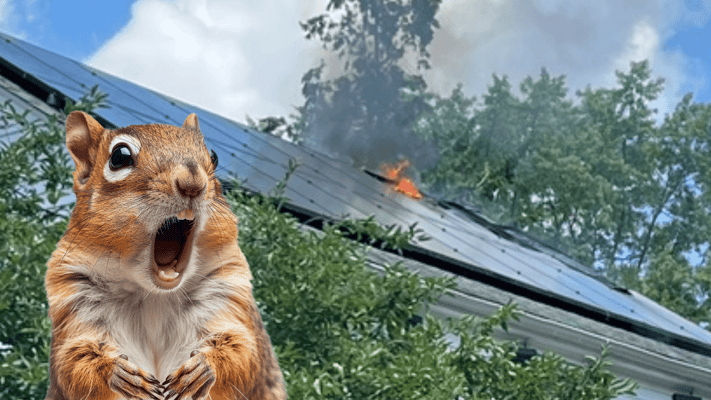
TL;DR: Squirrel activity beneath solar panels can create serious risks, including damaged wiring and combustible nesting material. After a Connecticut couple experienced a house fire involving their solar array, they learned firsthand about a risk they never knew existed. Proactive protection with a critter guard like HY-GUARD EXCLUSION® Pest Armor® L-Mesh™ can help keep squirrels and other nuisance wildlife from getting underneath solar panels.
This is a cautionary tale based on real events. All images included are credited to the victims. As per request, names have been adjusted to preserve anonymity.
THUMP-THUMP-THUMP.
A heavy pounding on the door startled Emily out of her Sunday afternoon reading. It was a quiet day in the middle-class Connecticut neighborhood, and her husband, Dan, was getting ready for a movie they planned to see later that night. She opened the door. It was one of their neighbors.
"Your roof is on fire," he said.
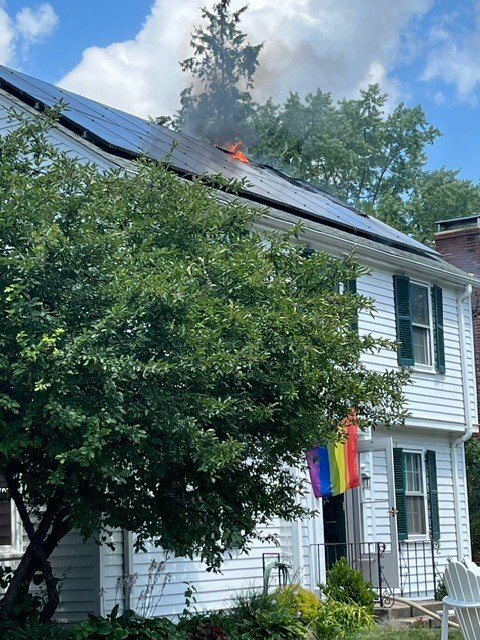
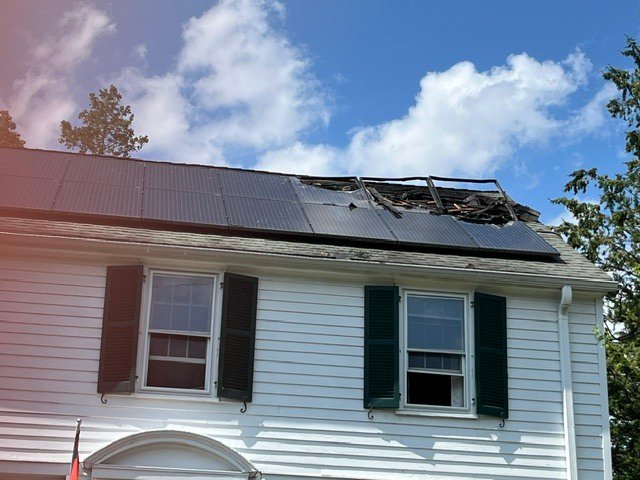
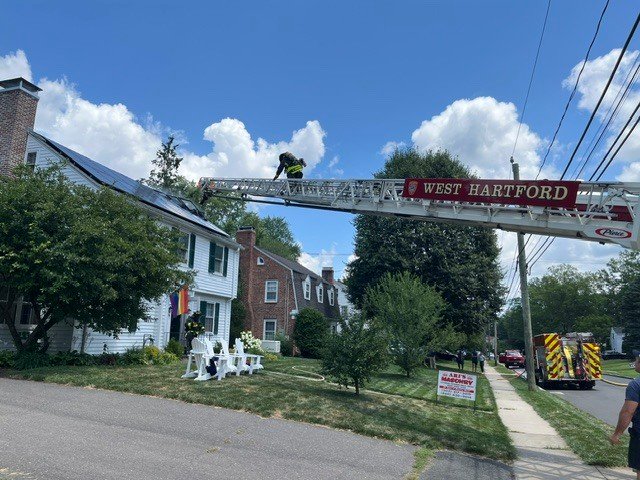
Emily stepped outside to look. Sure enough, it was.
One Decade of Solar Panels, One Risk Nobody Mentioned
Dan is an engineer specializing in energy management, and he wanted their household to be as energy efficient as possible. So, 11 years ago, the couple invested in solar panels.
They were among the first to do so in their neighborhood.
The sun doesn't always shine in Connecticut, Emily said. Clouds can reduce power output, as can ice and snow on the roof, but the panels always go back to work as normal when those things pass. From Emily’s experience, for the most part, solar panels run smoothly.
"You just stop thinking about them," Emily said. "You forget that you even have them."
Like any major home investment, solar panels face potential hazards from severe weather, falling debris, equipment problems — and, as Emily and Dan would discover, the local wildlife.
A Not-So-Quiet Sunday Afternoon
The fire drew quite the crowd, Emily said.
Firefighters ran a hose up through the house, all the way to the finished attic space that the family used as a spare bedroom. The room was damaged and smoky from the fire, but most of the home’s damage actually came from the water, which traveled from the attic through the second-floor bedroom, through the dining room, and down to the basement below.
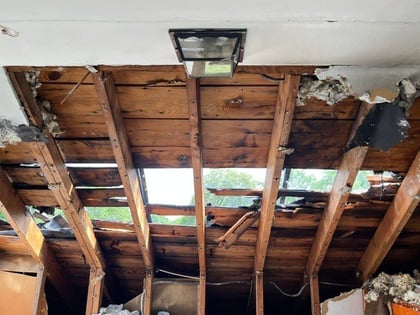
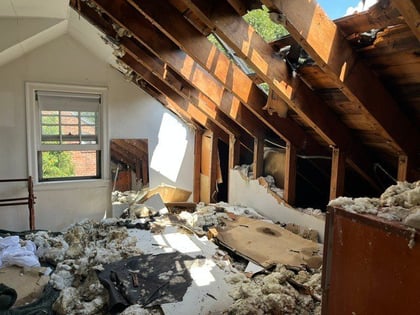
"I didn’t want them to be stingy with the water," Emily said. “But it just meant that all our floors were damaged, ceilings were damaged."
Insurance covered the roof replacement and fire damages, Emily said. Known squirrel activity beneath the panels emerged as a possible factor, but between the insurance inspectors, the fire marshal, and a state investigator, nobody could pinpoint the cause of the fire for certain.
Their best guess?
A squirrel may have damaged electrical wiring, or combustible nesting material beneath the array may have contributed to the fire. Both are recognized hazards associated with wildlife activity beneath solar arrays: Rodents can damage exposed wiring, while accumulated sticks, leaves, and other nesting material can introduce additional combustible material beneath the panels.
Why Squirrels Nest Under Solar Panels
Emily and Dan live in a suburban neighborhood. One observation Emily has made about the area? It has bears — and a lot of them, at that.
Bears wander through neighborhoods looking for garbage and have grown accustomed to being around people, Emily said. Wildlife experts often describe this pattern in two ways:
- Habituation: The animal stops seeing humans as a threat and loses its natural fear
- Food conditioning: The animal learns that people or trash bins mean easy food, and starts actively searching for it
Bobcats, raccoons, chipmunks, possums, and, of course, squirrels are all common sights in suburban areas like Emily and Dan’s, showing the same food- and shelter-seeking behavior as the local bears. When it comes to how she feels about it, Emily is conflicted.
"We're in their space, and they have every right to be where they are,” Emily said. “You want to protect your property, but we have to coexist because we have created a situation where they don't have their natural habitat."
Though they’re much smaller than bears, squirrels can still be dangerous for homeowners.
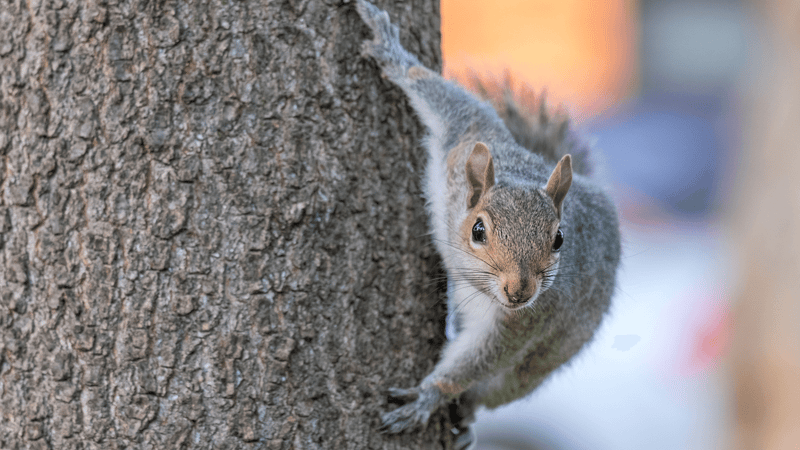
Squirrels are notorious for breaking into attics, siding gaps, and other sheltered spots that offer protection from predators and weather, solar arrays included. Even so, Emily doesn't hold it against them.
"I just can't even imagine the squirrel doing anything except what their nature tells them to do," she added.
Rebuilding (and Learning the Hard Way)
After losing their first solar array in the fire, the couple knew they needed another.
"I said to my husband, 'You know, I didn't even know this was a risk,'” she said. “I had no idea that squirrels nesting or chewing the wires could cause a fire in your solar panels, and he didn't, either. We hadn't heard of anyone else we knew with solar panels having that problem."
The fire happened about a year ago. Emily and Dan had lived with their original solar panels for 10 years, and it took nearly 10 months to put the house back together. Even now, well after the reconstruction has wrapped, Emily's still finding things out of place.
"I can't speak to squirrel behavior, but it seems to me like they're just sort of everywhere,” Emily said. “And I've heard from other people, they can get into your house and cause all kinds of damage. They didn't do that exactly here, but the nest was more than enough."
Along with knowing they needed more solar panels, they also knew they needed to do something different this time around.
"When we talked to the new installers, we asked, 'Is there something you could add to the panels to keep the squirrels out, because the same thing could happen again?' And they said, 'Oh yeah, we install these things called critter guards.'"
What Are Solar Panel Critter Guards?
Critter guards are physical barriers that close off the gaps under solar panels, keeping wildlife — and debris like leaves and sticks — from getting underneath in the first place. Most fall into one of two categories:
- Wire mesh: Cost-effective and shapeable to fit almost any panel, but can be tedious to install
- Adhesive barriers: Quick to put up, but pricier, temperature-limited, and not reusable
HY-C's HY-GUARD EXCLUSION® Pest Armor® L-Mesh™ takes a different approach.
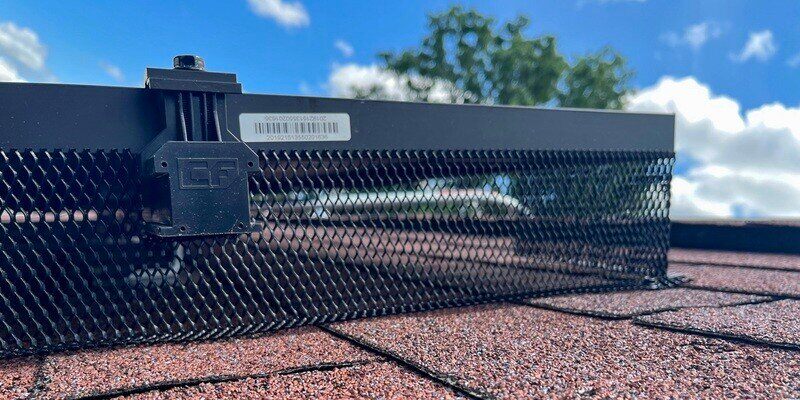
Built from galvannealed steel with a black powder coat finish to resist oxidation, it pressure fits directly to the outside panel edge and bends around corners using no adhesive or heavy hardware. It's a clipless install; clips are only needed if a panel has an unusual bubble or gap, and it's designed to block wasps, bees, stink bugs, and nuisance wildlife like squirrels while still allowing for the airflow panels need.
Plus, L-Mesh ships in sets of twenty 48-inch pieces (80 linear feet total) in two profile heights (3-1/2" and 5-1/2"), which is enough to cover most residential arrays.
A Second Array, A Second Nest
Emily and Dan's new solar array went up in February. By the time the critter guard installers arrived in May, the squirrels had already found another way in, and the crew pulled out a second nest almost immediately.
"I think they were the same squirrels, and I think they were waiting," Emily said. "Like, 'Oh! Here's our roof back, we can just make our nests again!'"
The debris underneath surprised her. "Dry sticks and leaves and all kinds of stuff — I don't even know where they got it all." Once the nest was cleared, the crew installed the guards, and the panels have stayed squirrel-free following the installation.
"I did have some people say to me after the fire, 'Well, that's a reason not to get solar panels.’ I say, 'No, it really isn't.' You just have to be aware."
So, Emily has been sharing her story ever since.
"You save so much money with solar panels, and even with a risk like this, you're still doing the better thing for the environment," she said. "I would tell anyone who has solar panels but doesn't have critter guards to look into getting those."
How to Protect Solar Panels from Squirrel Damage
If you have solar panels — new or old — a few habits might go a long way toward avoiding what happened to Emily, Dan, and their Connecticut home:
- Install critter guards around the full perimeter of your solar array, not just the sides facing the roofline
- Inspect the array regularly for nesting material, damaged wiring, loose guards, or other signs of animal activity
- Trim overhanging branches that give squirrels an easy route onto the roof
- Ask your solar panel installer directly whether critter guards were included, as they're not always standard
A house fire associated with wildlife activity beneath a solar array may be rare, but damaged wiring, nesting debris and other squirrel-related problems are risks worth taking seriously. A few preventive steps can help protect both the solar investment and the home beneath it.
FAQ: Squirrels, Solar Panels, and Critter Guards (Oh My!)
Can squirrels really start a fire in solar panels?
It's uncommon, but it happens. Squirrels can chew through exposed wiring under panels, and dry nesting material sitting near warm equipment can ignite. Investigators can't always confirm a squirrel as the definitive cause, but it's a recognized risk that installers and homeowners are increasingly aware of.
Why do squirrels nest under solar panels specifically?
The gap between panels and the roof is dry, shaded, elevated, and protected from predators and weather. Essentially, squirrels nest under solar panels for the same reasons squirrels nest in attics or under siding.
Are solar panel critter guards worth the cost?
Compared with the potential cost of damaged wiring, nesting debris, solar-panel repairs or — in rare circumstances — more serious property damage, critter guards can be a relatively small preventive investment. They can also help prevent non-fire-related problems caused by wildlife living beneath an array.
Do critter guards affect solar panel performance?
Well-designed and properly installed critter guards are intended to block pests without interfering with the airflow solar panels need. When installed correctly, they should not meaningfully affect panel performance.
How do I get critter guards installed on my solar panels?
Just ask your solar installer or a trusted wildlife technician whether they can install critter guards. Some critter guards on the market are DIY friendly, as well, though we find it best to rely on professional solutions (which are often the safest solution, too, given the height-safety training and experience most technicians have).
Protect Your Panels Before Wildlife Moves In
Whether you already have solar panels or you're planning a new installation, don't wait until wildlife has moved underneath them to start thinking about exclusion. Ask your solar installer or wildlife-control professional about protecting the perimeter of the array with a purpose-built critter guard.
For pest and wildlife professionals, HY-GUARD EXCLUSION Pest Armor L-Mesh provides a durable, professional solution for protecting solar arrays from squirrels, nuisance wildlife and insects.
Learn more about HY-GUARD EXCLUSION Pest Armor L-Mesh or contact your local HY-C distributor.
