

Sep 24, 2026
Share:
Subscribe now and get our latest blog and video content delivered straight to your inbox.
Sep 24, 2026
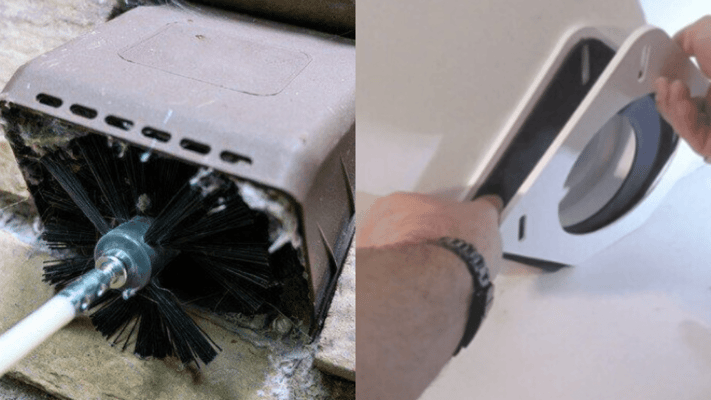
TL;DR: Dryer vents are both fire hazards and recurring animal entry points. If you're already finding nests, droppings, or chew damage during an exclusion job, cleaning the vent is a five-minute add-on that pays for itself. Gardus® LintEater® and LintEater® Pro kits are built for exactly this scenario, and SnugDryer® helps prevent the crushed ducts that invite pests back in.
If you work exclusion or wildlife removal jobs, you've pulled birds, mice, and squirrels out of dryer vent flaps more times than you can count.
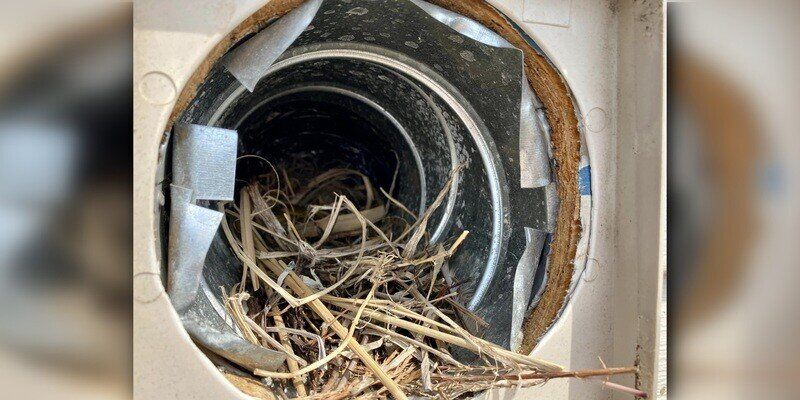
Nesting material builds up in the flap and duct fast, and it doesn't go away once the animal is gone. That leftover debris mixed with standard lint buildup is what turns a vent into a fire hazard.
But closing an entry point when you finish an exclusion job isn’t where it ends. By simply installing a new guard after the removal, you're often leaving a vent packed with nesting material, droppings, and lint behind.
Since you're already finding this problem, the opportunity is having the right tool to fix it while you're already on the job.
Dryer Vents: Fire Risks & Access Points
The National Fire Protection Association (NFPA) has long tracked clothes dryer fires tied to poor maintenance, and lint buildup remains a leading cause. Lint is highly flammable, and once it restricts airflow inside the vent, the dryer runs hotter and less efficiently.
For a pest or wildlife tech, there's a second risk layered on top: A dirty, damaged vent is more inviting to future animal activity.
Leftover nesting debris and a compromised duct give the next opportunistic critter a head start, even after you've sealed the obvious entry point. Cleaning the vent out becomes part of doing exclusion work thoroughly, going the extra mile to ensure comfort and peace of mind rather than rectifying a hazard someone else might catch later (or not).
The Upsell Case: Bolt It Onto the Exclusion Job
This isn't a pitch for a separate appointment, though; it's an item you can add to a job you're already running.
Envision your workflow. You're checking entry points, or maybe you've just removed an animal from a dryer vent and installed a guard. The vent is right in front of you. On top of that, it's very likely already clogged with the debris, whether it’s what the animal left behind or from regular dryer function.
Cleaning it on the spot means:
- No second truck roll
- No extra appointment to schedule
- A flat add-on fee for a service that takes minutes with the right kit
That's a straightforward way to raise ticket size on jobs you're already booked for.
LintEater® and LintEater® Pro: Built for This Job
Both kits by Gardus® use an auger-style brush head with staggered, self-feeding bristles that attaches to a standard household drill and clears the vent as it spins.
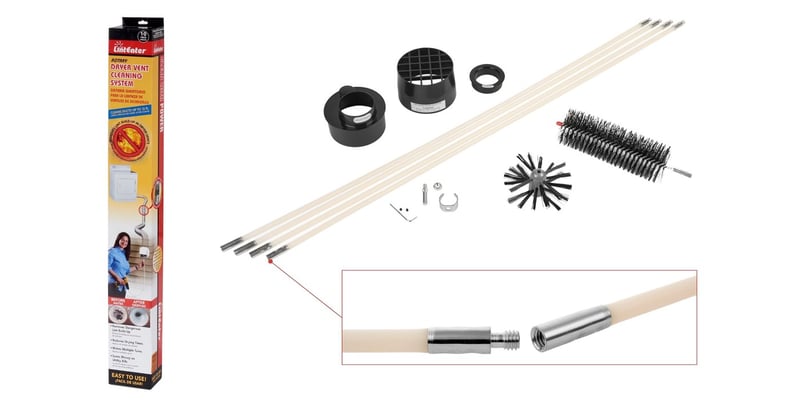
LintEater includes four 3' nylon rods (12' of reach), a blockage removal tool, a vacuum adapter, a 4" self-feeding auger brush, a lint trap brush, and a dryer adapter. Rods connect via screw-thread.
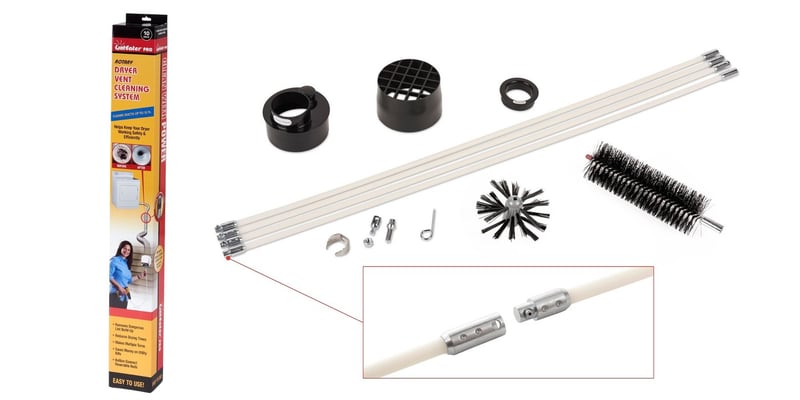
LintEater Pro includes the same core components, but the rods connect via button-link quick-connects instead of threads. That difference matters on exclusion jobs specifically: It lets the drill run in reverse without the rods disconnecting inside the vent, which is exactly what you need when you're clearing compacted nesting debris, droppings, or a duct an animal has chewed or scratched through alongside everyday lint.
|
Feature |
LintEater |
LintEater Pro |
|
Reach |
12' (extendable) |
12' (extendable) |
|
Rod connection |
Screw-thread |
Button-link quick-connect |
|
Reverse-drill safe |
No |
Yes |
|
Best suited for |
Routine lint buildup |
Post-exclusion debris, compacted nesting material |
Both are also available in Jr. versions and with extension kits for shorter or longer vent runs.
SnugDryer®: Preventing the Next Callback
Once an exclusion is complete, the goal is to keep the vent from becoming a repeat problem. Crushed or kinked ductwork restricts airflow the same way lint does, and it's a common issue in the older or improvised installs you'll find during retrofit and exclusion work.
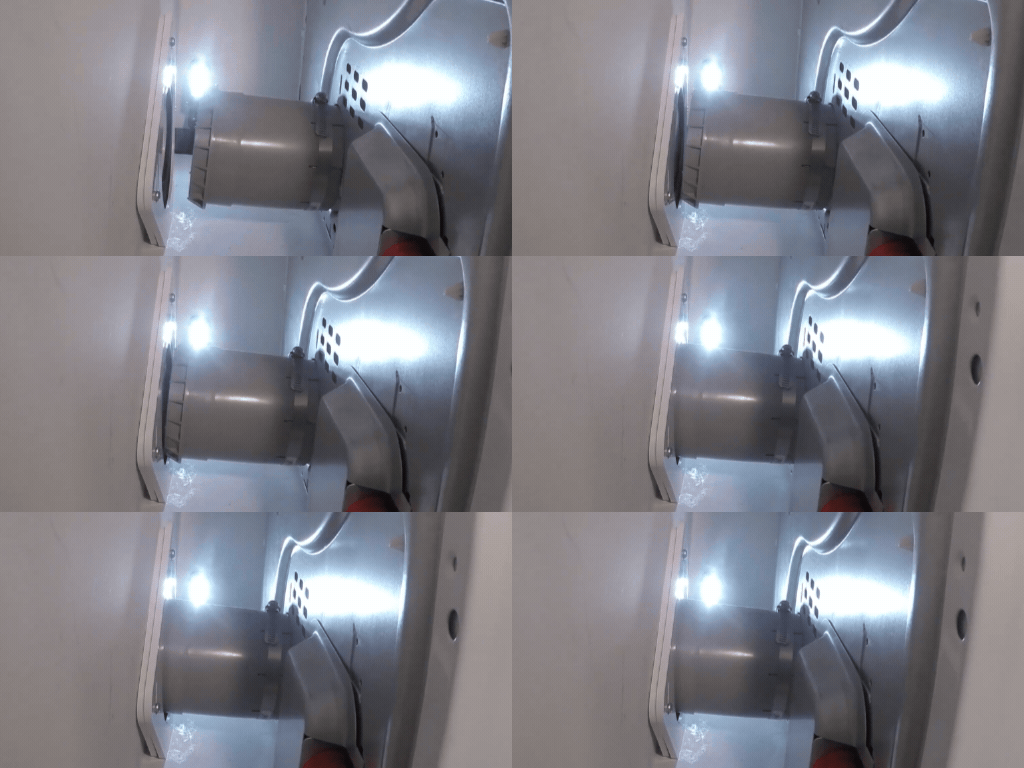
SnugDryer by Gardus addresses that directly by preventing crushed ducts, making it a natural "keep this from happening again" recommendation after an exclusion or during a retrofit, rather than a stand-alone upsell.
Why Keep These Items on Your Truck
- Pairs naturally with tools you already carry for inspection and exclusion work
- Turns a job you're already on-site for into an added line item, no extra scheduling required
- Addresses a real fire-safety and wildlife re-entry risk homeowners understand once it's explained
- LintEater Pro is purpose-built for the compacted debris and damaged ducts exclusion work can reveal
- SnugDryer helps ensure no callbacks for the same job
Pest and wildlife supply distributors might not always carry this category, but it fits naturally alongside the exclusion and inspection tools you already have.
Dryer Vent Cleaning FAQs for Techs
Why would a pest control tech clean a dryer vent?
Dryer vents are a common animal entry point. Techs doing exclusion or wildlife removal work are often already at the vent, and it's frequently left full of nesting debris even after the animal is gone.
What's the difference between LintEater and LintEater Pro for this kind of job?
LintEater Pro uses button-link rods that stay connected even when the drill runs in reverse, which matters when clearing compacted nesting material or damaged duct sections, not just standard lint.
How often should a vent be cleaned after an exclusion job?
Beyond the standard six-month to annual cleaning recommendation, any vent that recently housed nesting animals should be cleared immediately as part of finishing the exclusion, since leftover debris can still pose a fire risk and make the vent attractive to future activity.
Start Adding-On Dryer Vent Services Today
Ready to start cleaning dryer vents with LintEater or LintEater Pro? What about preventing crushed ducts with SnugDryer?
You can find both tools online or at a store near you using our website’s built-in Product Locator, or you can check out our Amazon.
