

Mar 11, 2026
Share:
Subscribe now and get our latest blog and video content delivered straight to your inbox.
Mar 11, 2026

TL;DR: Skunk breeding season begins in late winter (February-March), bringing increased activity, roaming, and scent-marking, with litters of 4-7 kits typically born under porches, decks, sheds, or crawl spaces between April and June. If you encounter a skunk, back away slowly since warning signs (foot-stomping, tail-raising) precede spraying, and prevention is best achieved by sealing entry points, securing trash cans, and removing outdoor food sources before breeding season peaks.
Imagine your most annoying neighbor.
Now imagine that neighbor is about the size of a house cat, dressed like a tiny mobster in a black-and-white suit, digging holes in your yard at 2:00 a.m., knocking over your trash cans like a raccoon with a grudge, and carrying a built-in chemical weapon that could clear a football stadium.
Also, they’ve decided the dark space under your porch would make a lovely place to raise a family.
If that mental picture feels oddly familiar, congrats. You’ve just met the skunk.
Like many wildlife species, February and March mark the transition from reduced winter activity to skunk breeding season. As temperatures rise, skunks become more active — and more noticeable — around residential properties.
So what does this seasonal shift mean for homeowners?
Skunk Breeding Season: What Changes in Late Winter?
Skunks move from torpor (a state of reduced activity) into breeding season in late winter. Mating time is marked by:
- Increased activity
- Male skunks roaming far and wide to find mates
- Increased musky odors from scent marking and defensive sprays
- Occasional fighting between males
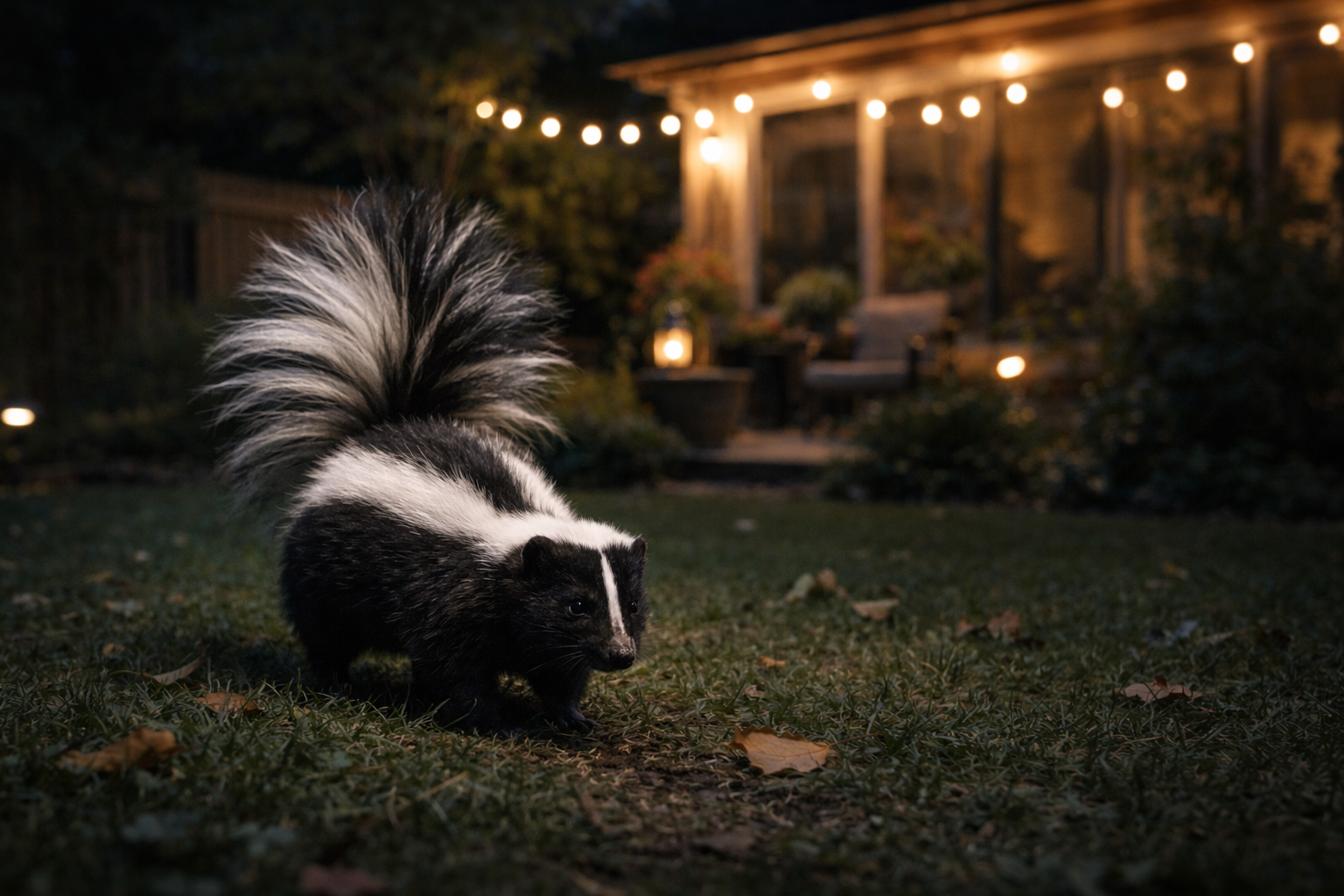
Warmer, mild winter days generally trigger this spike in activity, meaning homeowners may start noticing signs of skunks even before spring officially arrives. This often is when homeowners begin noticing skunks around their property for the first time.
Signs There May Be Skunks on a Property
Skunk gestation lasts roughly 60-75 days. Litters of four to seven kits are typically born in dens between April and June. Common den sites include:
- Under porches or decks
- In crawl spaces
- Beneath sheds
- Inside burrows
- Other dark, sheltered areas around the home
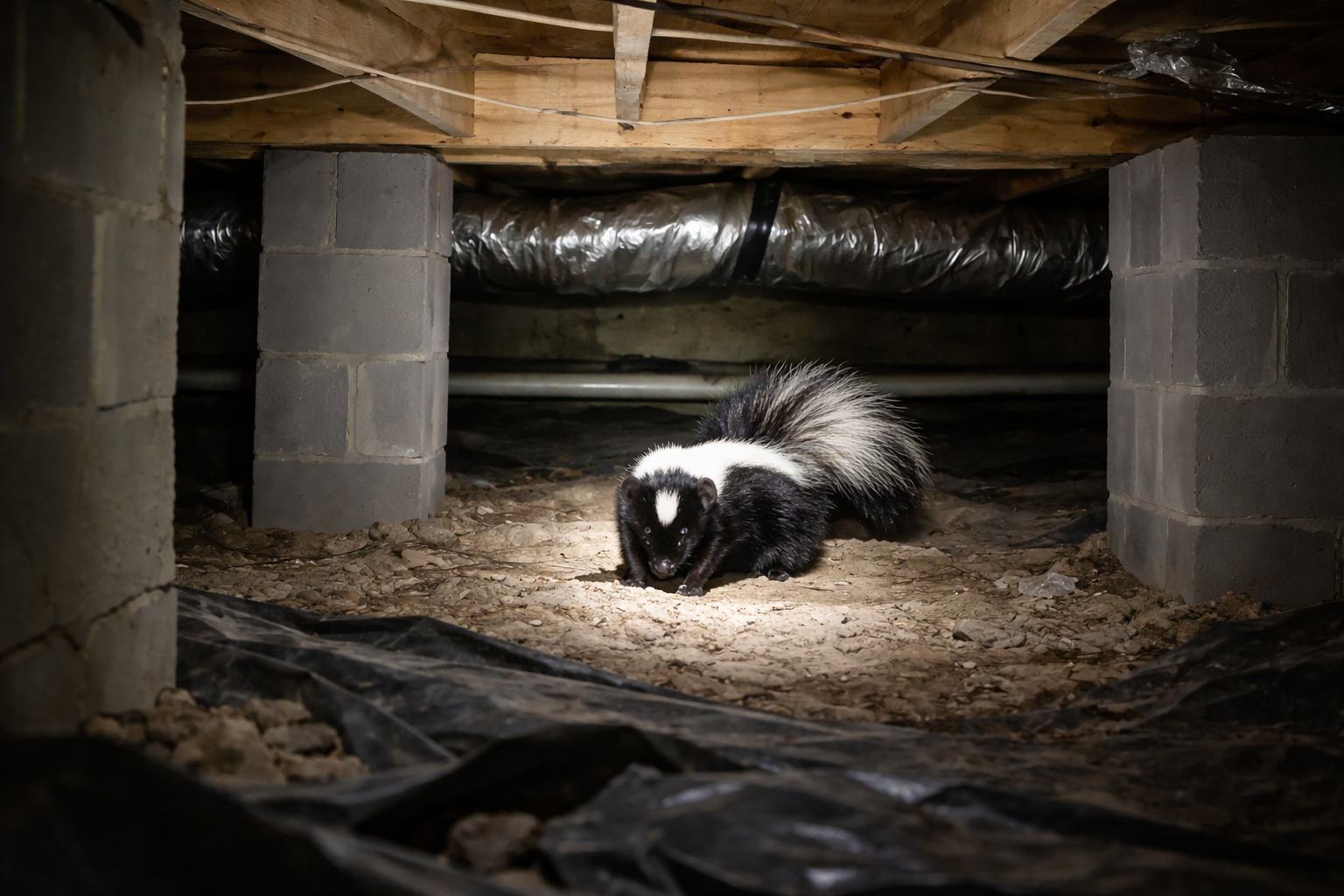
For most homeowners, one skunk is more than enough. Four to seven more? Even less ideal.
Since skunks are nocturnal, most activity happens at night. That said, you can also look for these daytime clues:
- Skunk tracks: Five toes on each foot with visible claw marks
- Distinctive odor: The unmistakable spray is a strong indicator a skunk is nearby, even if you never see it
- Small, cone-shaped holes in the yard: Skunks dig one- to three-inch holes while searching for insects, grubs, and earthworms
- Raided garbage cans: As opportunistic omnivores, skunks will gladly forage through unsecured trash
Skunks often den near reliable food sources. While they don’t always return to the same den site every year, they may reuse locations with abundant resources, which frequently means areas close to human homes.
What to Do if You Encounter a Skunk
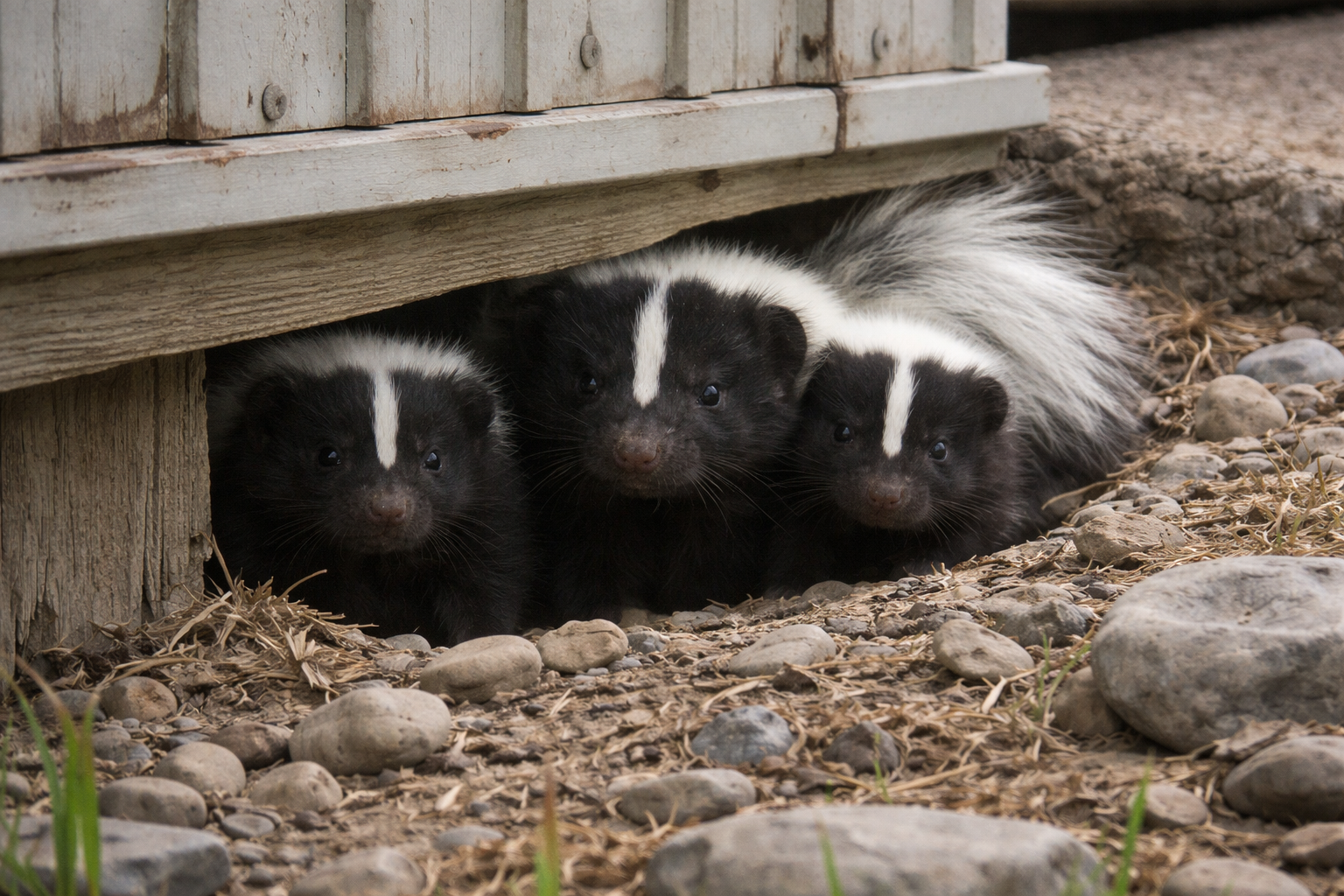
Skunks are generally calm animals, but they will defend themselves if threatened.
Skunks have poor eyesight, so it’s best to back away slowly and quietly if you see one. Avoid sudden movements. Before spraying, a skunk typically gives warning signs such as:
- Stomping its front feet
- Raising and shaking its tail
- Fluffing its fur
If you get within six to eight feet of a skunk, there’s a high chance you could be sprayed, and they can release multiple sprays when threatened.
In addition to spraying, skunks can also carry diseases such as rabies, so direct contact should always be avoided. If you discover a skunk den on your property, we recommend keeping your distance (at least 15 feet) and contacting a licensed wildlife professional for the safest removal possible.
How to Prevent Skunks Around Your Home
The good news: Skunk prevention is possible, especially when you act before breeding season peaks.
You can start with these proactive steps:
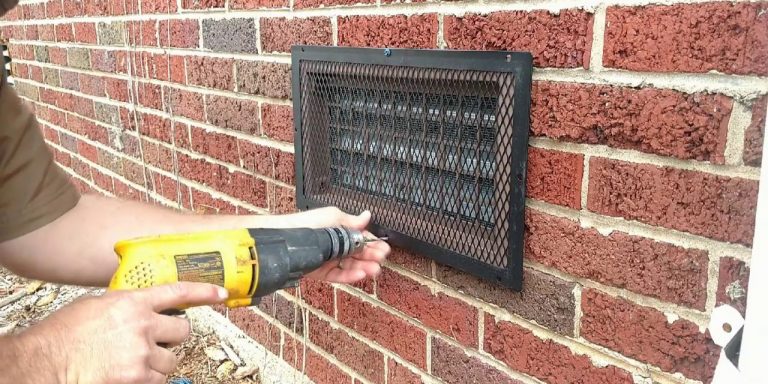
- Seal gaps and entry points with durable exclusion materials like HY-GUARD EXCLUSION® Pest Armor® Profiles and Foundation Vent Screens with or without InsectArmor™, all of which are made from galvannealed steel
- Secure trash cans with tight-fitting lids
- Remove outdoor pet food and other easy food sources
If a skunk is suspected to already be denning under a structure, exclusion work should be performed carefully or by a professional to avoid trapping animals inside.
Understanding skunk behavior during late winter and early spring helps homeowners protect their property before small wildlife problems turn into larger infestations. Because when you know more about your furry neighbors, you’re better equipped to protect both your home and the wildlife living around it.
