Nov 12, 2026
Share:
Subscribe now and get our latest blog and video content delivered straight to your inbox.
Nov 12, 2026
TL;DR (Quick Answer)
Creosote buildup is a preventable cause of house fires. Between annual chimney sweep inspections, you can clean your flue yourself from inside the house with SootEater® and a household drill: Trim the whip to fit your flue, seal off the fireplace, then spin the rods up the chimney and back down. If you see shiny, tar-like glaze, call a certified professional instead.
Key Takeaways:
- Creosote fires are preventable. Most residential heating fires reported to U.S. fire departments are confined to chimneys, flues or fuel burners, and routine cleaning reduces that risk.
- DIY cleaning complements a sweep; it doesn’t replace one. Use SootEater for maintenance between visits, and get a certified chimney sweep inspection at least once a year.
- Check the buildup before you start. Soft soot and flaky creosote are safe to clean yourself. Shiny, black, tar-like glaze means you should stop and call a professional.
- No roof climbing required. SootEater cleans from inside the house, from the bottom up, with a household drill.
- Sizing is the most important step. Measure your flue (straight across if it’s round, corner to corner if it’s square), then trim the whip ¼ inch longer than that measurement.
- Seal the opening to keep soot out. A drop cloth, a taped plastic cover and a shop vacuum keep the mess inside the fireplace.
From 2017 to 2019, there were 34,200 heating-related fires in residential buildings reported to U.S. fire departments each year, according to the U.S. Fire Administration. Of those, 77% were confined to chimneys, flues, or fuel burners.
Creosote is a dangerous, flammable buildup that forms inside chimney flues. There’s no replacing a chimney sweep — they’re the expert defense against creosote, and you should get your chimney inspected by a certified sweep annually — but routine maintenance between professional visits is also recommended.
It just so happens that HY-C Company manufactures a tool that makes doing so easy.
In this guide, we’re going to walk you step by step through a DIY cleaning using the SootEater® Drill Powered Rotary Chimney Cleaning Kit (RCH205M) by our brand Gardus®.
Safety First
Before you clean your chimney flue with SootEater, there are a few safety measures to keep in mind before you even open the packaging.
- Make sure the fireplace or stove is completely cold: Never clean a chimney that was used recently.
- Check the air: If air is blowing down the chimney into the house, wait to clean it.
- Wear safety gear: Goggles, a dust mask, gloves, and old clothes are recommended. Tuck in anything loose so it can't get tangled in the spinning rods.
- Stay off the roof: Cleaning from inside the house, from the bottom up, avoids climbing.
What You Need
At this point, you’ve wrapped up your initial safety checks. Next up, make sure you have everything you’ll need for a successful DIY rotary chimney cleaning, according to the kit’s operator’s manual.

- The SootEater kit (RCH205M), which should include the whip (the spinning head with plastic strings), 6 rods, the drill adapter, the hex key, and the plastic cover
- A power drill with a clutch (cordless works best)
- A drop cloth, a flashlight, and duct tape
- A shop vacuum with a fine dust filter (a HEPA filter is helpful but not required)
You can find the kit and most other materials at a variety of hardware stores and online. Use the Product Locator on our website.
If you’re missing anything in your kit, please reach out to our customer service team.

The Steps
Now, for the actual cleaning. To make this as simple as possible, we’ve consolidated our operator’s manual into 15 easy steps.
- Look inside first: Open the damper and shine a flashlight up the chimney. Soft, fluffy soot or flaky, crusty creosote is fine to clean yourself. If you see shiny, black, tar-like buildup (called glaze), stop. That needs a professional chimney sweep.
- Measure the flue: The flue is the tunnel the smoke goes up.
- For a round flue, measure straight across.
- For a square or rectangular flue, measure from one corner to the opposite corner (diagonally).
- Trim the whip: Use the trim guide on page 1 of the manual to cut the whip strings so they are ¼ inch longer than your measurement. This lets the strings scrub the walls without getting stuck.
- Protect the room: Lay the drop cloth on the floor. Add the plastic cover over the fireplace or stove opening and tape the edges with duct tape. If you have a vacuum, cut a small hole in the plastic, push the hose through, tape around it, and turn the vacuum on. Leave the top corner of the plastic untaped for now.
- Attach the whip to a rod: Press the button on the rod and slide the pieces together until the button clicks into place.
- Feed the rod through the plastic: Cut a small slit near the middle of the plastic. From inside the fireplace, push the bare end of the rod out through the slit so the whip stays inside. Then finish taping the plastic closed.
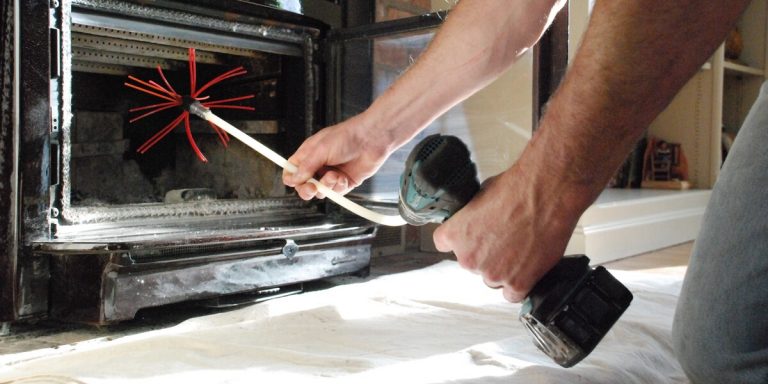
- Hook up the drill: Put the drill adapter into the drill, then connect the rod to the adapter.
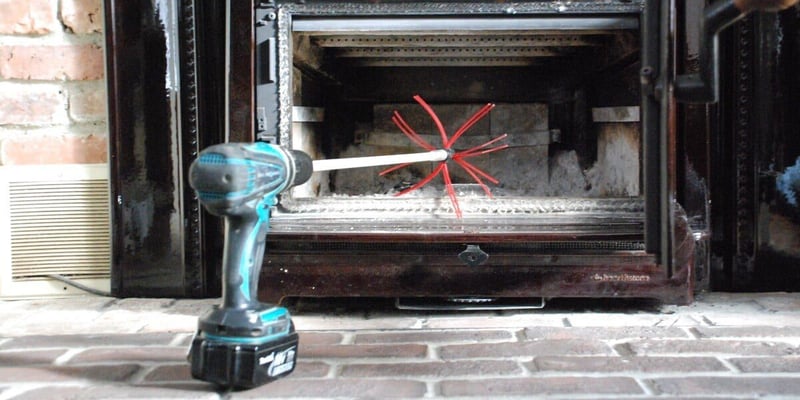
- Spin and push up: Turn on the drill and slowly push the spinning whip up into the flue. Move the rod up and down a little as you go (a "back and forth" motion). This scrubs better and keeps screws inside metal pipes from cutting the rod.
- Add rods one at a time: When one rod is almost all the way in, stop the drill, attach the next rod, and keep going.
- Handle square or rectangular flues: Spin in one direction for the length of one rod, then switch the drill to reverse and spin the other way while moving the rod in and out. This cleans all the corners.
- Keep the rods gently curved: Never force the rods around a sharp bend. Tight bends can snap them.
- Know when you've reached the top:
- If there is a chimney cap, you'll hear and feel the whip hit it. Go slowly so you don't push the cap off the chimney.
- If there is no cap, the rods will suddenly spin more easily because the whip has come out the top.
- Bring it back down: Keep spinning gently as you pull the rods back down, removing one rod at a time. To take rods apart, press the button with the pointed end of the hex key.
- Check your work: Shine the flashlight up the flue (a mirror helps) to make sure it's clean. Repeat any dirty spots.
- Clean up:
- For a fireplace, brush or vacuum the soot off the smoke shelf (the ledge just above the damper) and scrub the inside walls of the firebox.
- For a wood stove, also clean the connector pipes and the inside of the stove.
- Remove the fallen soot. If you have no vacuum, move slowly so the dust doesn't fly into the room.
For more detailed instructions, refer to your SootEater operator’s manual.
Helpful Habits from the Manual
The operator’s manual also explains cleaning from the top down (from the roof). The steps are similar, but you spin the whip down the chimney and must be very careful not to drop rods into it. That method involves roof work, so it's best left to experienced adults.
Even if you clean your chimney yourself, the manual recommends getting it inspected by a certified chimney sweep at least once a year. SootEater is best for routine maintenance between chimney sweep visits.
SootEater FAQs
Can I clean my chimney flue myself?
Yes. You can clean light soot and flaky creosote yourself with a rotary kit like SootEater between professional visits. You should still have a certified chimney sweep inspect your chimney at least once a year.
When should I call a chimney sweep instead of cleaning it myself?
Call a certified chimney sweep if you see shiny, black, tar-like buildup called glaze. Glazed creosote is hard to remove and needs professional treatment. You should also call a sweep for your annual inspection.
Do I have to get on the roof to use SootEater?
No. SootEater is designed to clean from inside the house, from the bottom up through the fireplace or stove. The manual also covers a top-down method from the roof, but that is best left to experienced adults.
How do I size the SootEater whip for my flue?
Measure a round flue straight across, or a square or rectangular flue diagonally from corner to corner. Then trim the whip strings so they are 1/4 inch longer than that measurement using the trim guide in the manual.
What kind of drill do I need for SootEater?
Any power drill with a clutch will work, and a cordless drill is easiest to handle. The drill adapter included in the kit connects the drill to the first rod.
Does SootEater work on square or rectangular flues?
Yes. Spin the whip in one direction for the length of one rod, then switch the drill to reverse while moving the rod in and out. Alternating directions helps the strings reach into the corners.
How do I keep soot from getting into my house?
Lay a drop cloth, tape the kit’s plastic cover over the fireplace or stove opening, and feed the rod through a small slit in the plastic. For extra protection, tape a shop vacuum hose through the plastic and run it while you clean.
How do I know the whip has reached the top of the chimney?
If your chimney has a cap, you will hear and feel the whip hit it, so slow down to avoid pushing the cap off. If there is no cap, the rods will suddenly spin more easily once the whip exits the top.
Can SootEater replace a professional chimney sweep?
No. SootEater is meant for routine maintenance between professional visits. A certified chimney sweep can spot damage, blockages and glazed creosote that a DIY cleaning cannot address, so annual inspections are still recommended.
Where can I buy the SootEater chimney cleaning kit?
SootEater (RCH205M) is sold online and at hardware stores. Use the Product Locator on the HY-C website to find a retailer near you.