Nov 5, 2026
Share:
Subscribe now and get our latest blog and video content delivered straight to your inbox.
Nov 5, 2026
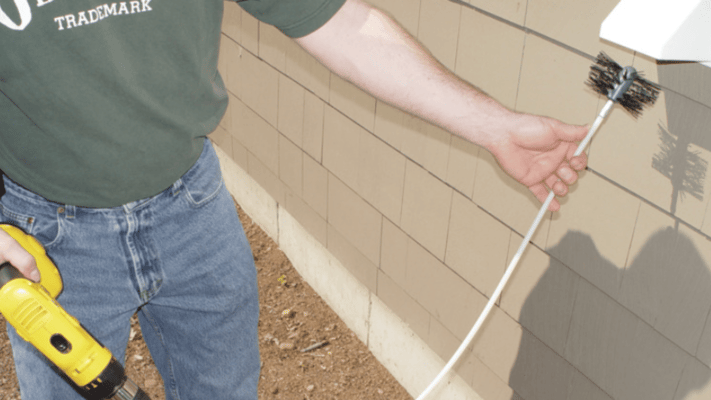
TL;DR: Lint buildup is a preventable cause of house fires. Between professional services, you can clean your dryer vent yourself with LintEater® and a household drill: Check the vent, clear any blockages, set up suction, spin the brush through the vent, and reconnect and test the dryer.
From 2010–2014, U.S. fire departments responded to an average of 15,970 home fires involving clothes dryers or washing machines each year, according to the National Fire Protection Association. Of those, 92% were caused by clothes dryers, and 26% of the items first ignited were dust, fiber, or lint.
Lint is a dangerous, flammable buildup in dryers and dryer vents. There’s no replacing a professional service — you should get your dryer vent cleaned at least every six months — but routine maintenance between professional visits is also recommended.
It just so happens that HY-C Company manufactures a tool that makes doing so easy.
In this guide, we’re going to walk you step by step through a DIY cleaning using the LintEater® Drill Powered Rotary Chimney Cleaning Kit (RLE202L) by Gardus®.
Safety First
Before you clean your dryer vent with LintEater, there are a few safety measures to keep in mind before you even open the packaging.
- Wear goggles and a dust mask: Lint flies everywhere.
- Tuck in loose clothing: Hoodie strings, and anything else that could wrap around the spinning rods.
- Always spin the drill clockwise (forward): If you spin it backward, the rods can unscrew and get stuck inside the vent.
- Never force the rods: Pushing too hard can break the rods or damage the vent.
- Unplug the dryer: Do so before pulling the dryer away from the wall. Be extra careful with a gas dryer, since it has a gas line attached.
- Adults should handle any ladder work: If the outside vent is up high, be responsible and adhere to standard safety measures.
What You Need
At this point, you’ve wrapped up your initial safety checks. Next up, make sure you have everything you’ll need for a successful DIY rotary chimney cleaning, according to the kit’s operator’s manual.
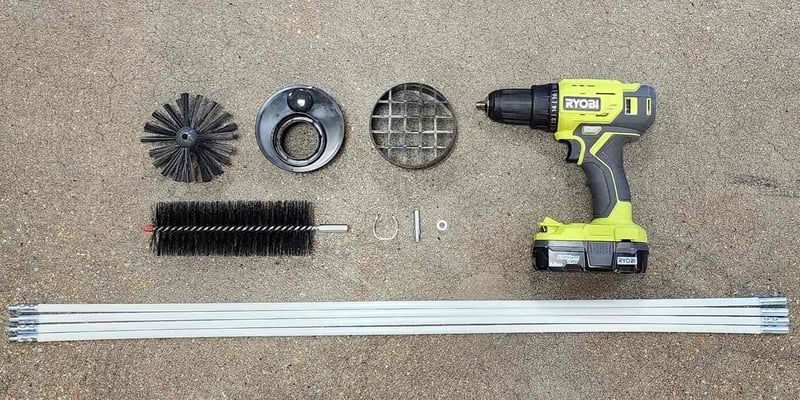
- The LintEater kit (RLE202L), which should include 4 flexible rods, 3 feet each, an auger brush (the round, spiky brush), a vacuum adapter, a blockage removal tool (the claw-shaped piece), a long lint brush, and a dryer/blower adapter (the round piece with a grid)
- A cordless drill with an adjustable clutch
- Two pairs of pliers
- Duct tape or electrical tape
- A flashlight
- A shop vacuum with a 2½ inch hose, or an electric leaf blower
You can find the kit and most other materials at a variety of hardware stores and online. Use the Product Locator on our website or shop on Amazon.
If you’re missing anything in your kit, please reach out to our customer service team.

The Steps
Now, for the actual cleaning. To make this as simple as possible, we’ve consolidated our operator’s manual into 20 easy steps, divided further into five parts.
1. Figure out what the vent is made of: Shine a flashlight into the outside vent, or poke a rod in about a foot and tap the inside.
- A dull, soft sound means white vinyl or foil. Be gentle with these. The manual recommends replacing them with all-metal venting.
- A clear metal "clink" means metal venting.
2. Test the airflow: Turn the dryer on a heat setting. Go outside and hold your hand by the vent opening.
- If there is a screen over the vent opening, take it off and leave it off, because it traps lint.
- No air coming out? Go to Part 2.
- Air coming out? Skip to Part 3.
Part 2: If there is no airflow
3. Turn the dryer off: Look for signs of a bird's nest, like bird droppings near the vent or straw, leaves, or twigs inside it.
4. Pull out the blockage: Attach the blockage removal tool to a rod.
- Push it into the vent by hand, not with the drill.
- Add rods until you reach the blockage.
- Twist clockwise while pushing in so the tool grabs the blockage.
- Keep twisting clockwise while you pull it out.
- Repeat until the tool slides through easily.
5. Test the airflow again: If there is still no air, the vent may be crushed, torn, or disconnected somewhere. That needs a professional.
Part 3: Get ready to clean
6. Prop open the outside vent: Tape or clip the flap open. If your vent has slats (louvers), remove them by gently bending each one in the middle. Don't break the little plastic pins on the ends.
7. Pull out the dryer: Turn the dryer off, unplug it, and carefully slide it away from the wall.
8. Clean behind the dryer: Use the long lint brush and a vacuum to clean the back of the dryer and the floor around it.
9. Hook up suction: Disconnect the vent hose from the back of the dryer.
- Attach a shop vacuum to the hose using the vacuum adapter and duct tape.
- Or attach an electric leaf blower, with the dryer/blower adapter placed between the blower and the vent.
- Make sure the outside vent is propped open first, then turn it on.
- If the vent hose gets sucked flat or crushes inward, turn the vacuum off right away. Something is blocking the vent, and it should be checked by a professional.
Part 4: Spin the brush through the vent
10. Set the drill clutch: Set it to the middle setting or a little lower. You should be able to stop the drill's chuck (the spinning front part) with your hand, but still feel it pushing.
11. Attach the brush: Screw the auger brush onto a rod. Tighten the small set screw with the included hex key, then wrap the joint with tape. Put the other end of the rod into the drill and tighten the chuck by hand.
12. Start cleaning from outside: With the vacuum or blower running inside, go outside.
- Spin the brush into the vent, always clockwise.
- Use moderate to high speed, and move the rod in and out as you go.
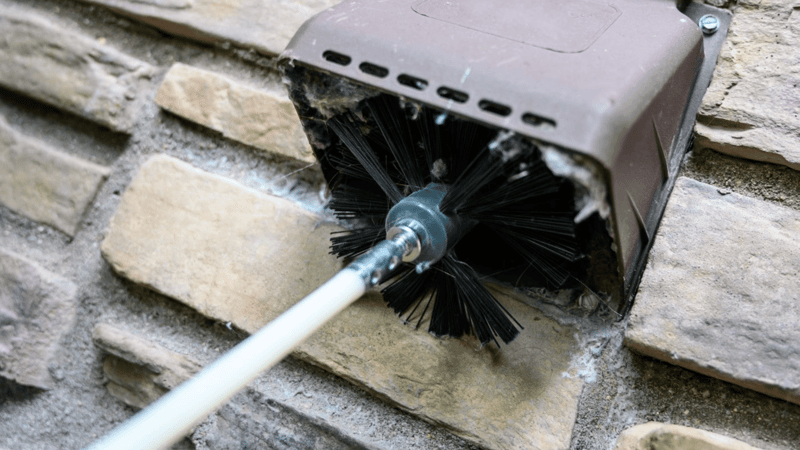
13. Add rods one at a time:
- Screw each new rod on and tighten it with two pairs of pliers.
- Wrap every joint with tape.
- Keep going until you reach the other end.
14. Stop if it gets stuck: If the brush catches or binds up, stop immediately. Take your time.
15. Check if you reached the end: Go inside, unhook the vacuum, and look into the vent hose. If you don't see the brush, finish by cleaning from the inside toward the outside, with the vacuum adapter attached so the lint is sucked back toward you.
-
Count how many rods you used from outside so you know how far you got.
16. Pull the rods out:
- Keep spinning clockwise as you pull the rods out.
- Take off one rod at a time, and don't let the rods still in the vent spin backward, or they'll come apart inside.
- To unscrew a rod, use two pairs of pliers, or hold the rod tightly and run the drill in reverse. Only the rod on the drill should turn.
Part 5: Finish up
17. Close up the outside vent: Remove the tape or clip, or put the slats back in.
18. Reconnect the dryer: Attach the vent hose to the dryer. If you're installing new metal venting, the crimped (narrower) end of each piece must point toward the outside.
19. Push the dryer back and plug it in.
20. Test it: Turn the dryer on and feel the air outside. It should be noticeably stronger than before.
Other Ways to Clean the Vent
- Using the dryer's own air: Put the dryer/blower adapter on the back of the dryer, connect the vent to it, and run the dryer while you brush from outside.
- Wear goggles and a mask, because the lint will blow out toward you.
- Remove the adapter when you're done, or it will collect lint.
- By hand: You can twist the rods clockwise by hand instead of using a drill. Use a vacuum, leaf blower, or dryer air to carry the lint away.
- With the vacuum attached outside: You can connect the vacuum to the outside vent and brush from inside toward it.
Other Things LintEater Can Clean
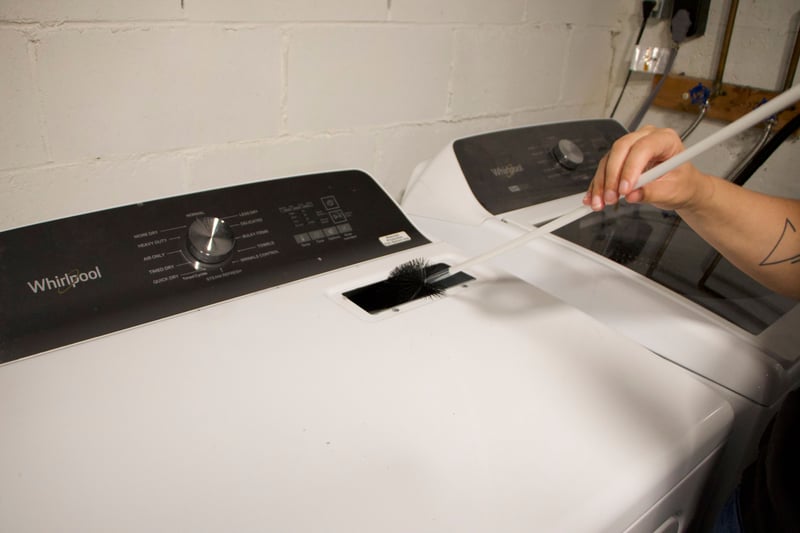
- The lint trap slot: Use the lint brush to clean the slot the lint screen slides into. Scoop the lint up toward you while a vacuum cleans the brush. You can bend the brush to reach better.
- Under the refrigerator: Attach the lint brush to a rod to reach dust and junk under the fridge or in other hard-to-reach spots.
- Baseboard heaters: Run the lint brush over the metal fins while turning it clockwise, with a vacuum nearby. Be careful not to bend the fins.
- Clogged gutter downspouts: Attach the blockage removal tool to a rod, push it up from the bottom of the downspout, adding rods as needed, and twist clockwise into the clog until it clears. It also works from the top.
Helpful Habits from the Manual
- Clean the lint screen before every load.
- Wash the lint screen with hot soapy water and an old toothbrush at least every 6 months. Dryer sheets leave a film on it.
- Clean the lint screen slot once a week.
- Clean the dryer vent and the area around the dryer 3 to 4 times a year.
And as mentioned, you can buy LintEater online or at a store near you. Find one with our Product Locator.