
Feb 25, 2026
Share:
Subscribe now and get our latest blog and video content delivered straight to your inbox.
Feb 25, 2026
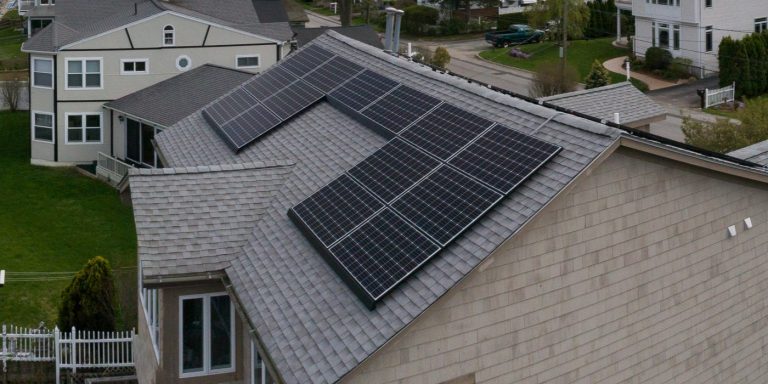
A significant number of U.S. homeowners are installing solar panels, and the numbers continue to grow.
According to the Solar Energy Industries Association, there were over 5 million solar installations in the United States as of 2024, 4.2 million of which were residential. And as adoption increases, so does the need for proper solar panel maintenance and seasonal protection.
Solar energy production varies throughout the year:
- Summer produces up to 50% more energy than winter due to longer, sunnier days
- Winter sees reduced production because of shorter days and a lower sun angle, though panels operate more efficiently in cooler temperatures
- Spring and fall are often the sweet spot, combining moderate temperatures with steady sunlight exposure
While seasonal energy production changes are expected, seasonal solar panel hazards are often overlooked.
The cost of solar (and why protection matters)
Several factors influence the cost of a residential solar system, including the system size, regional pricing differences, installation costs, battery backup inclusion, and available incentives. In our home state of Missouri, for example, the average cost to install a 13.3 kilowatt (kW) solar panel system before incentives is approximately $33,659.
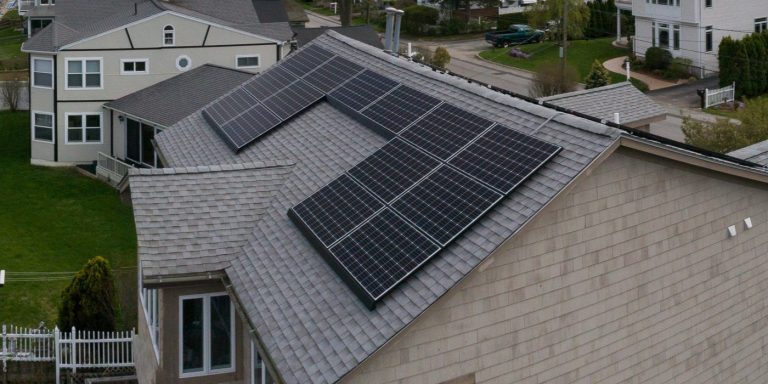
With an investment of that size, protecting your system from seasonal damage should be a priority. Proper maintenance helps maximize the return on investment (ROI), extend the system’s lifespan, and preserve property value.
Pest and wildlife damage to solar panels
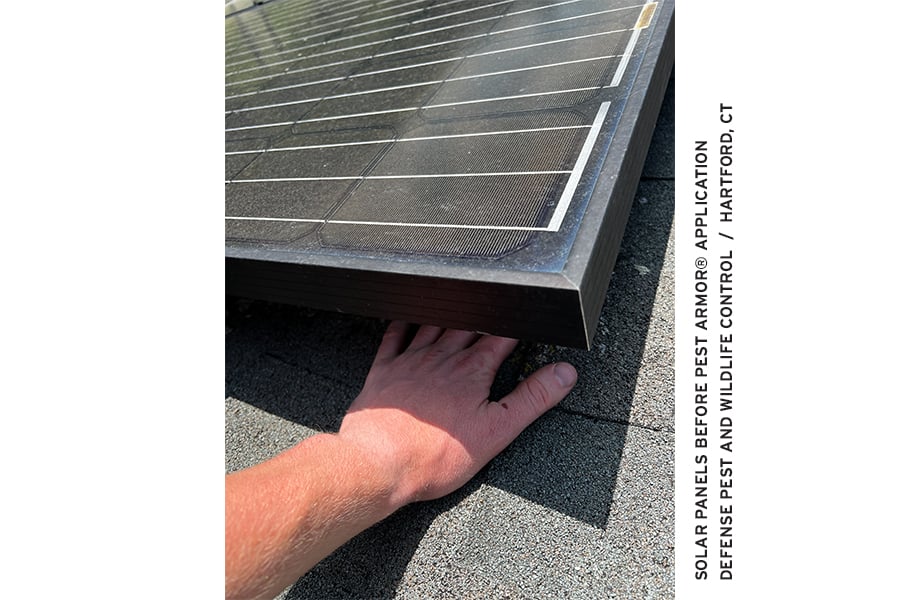
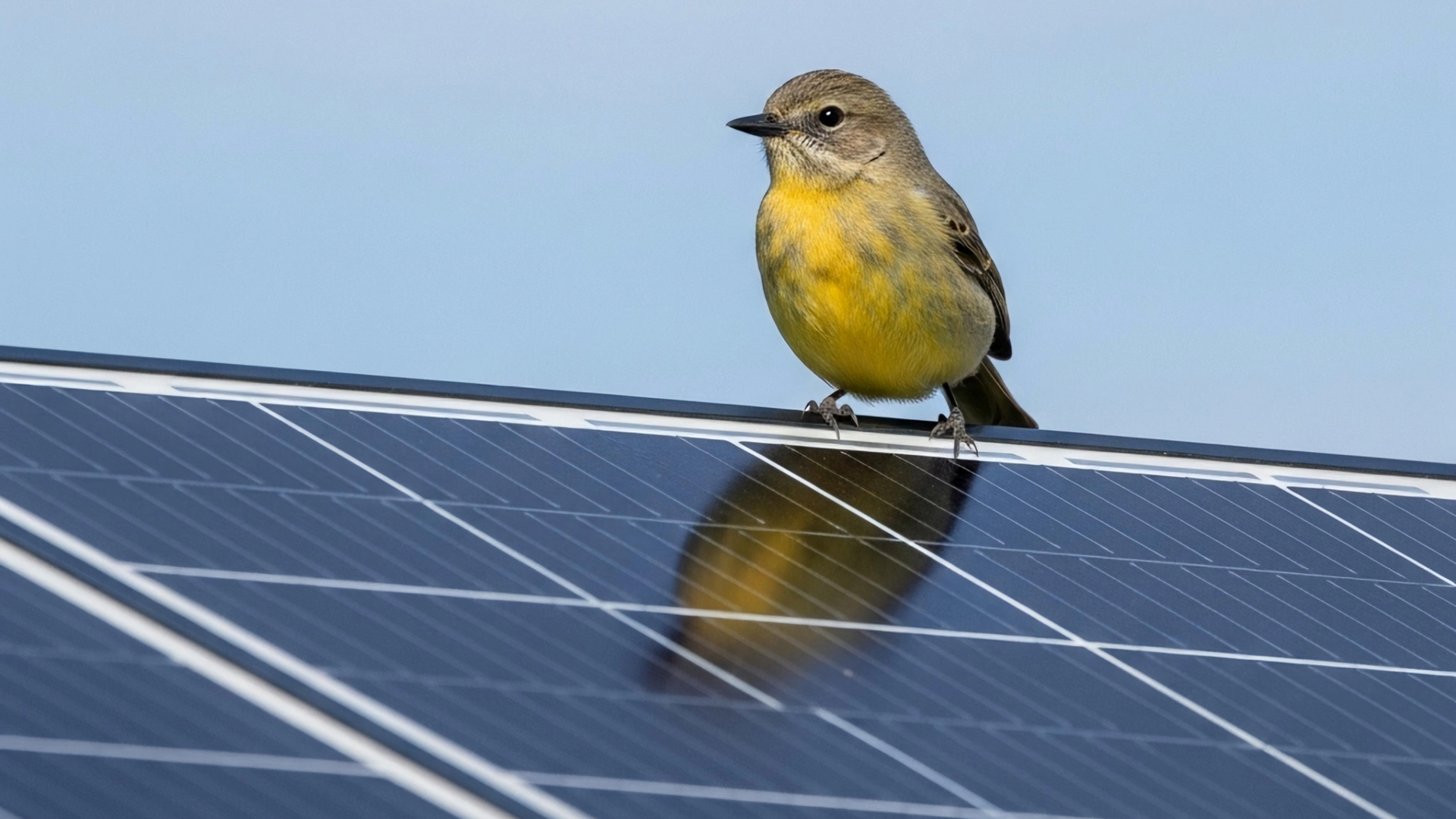
Wildlife damage is one of the most common — and costly — solar panel issues. The 4” to 8” gap between solar panels and the roof creates a warm, shaded, and protected space ideal for birds, squirrels, mice, and raccoons, making spring and fall peak seasons for nesting and shelter-seeking behavior.
Common problems caused by pests
- Chewed wiring leading to electrical faults
- Corrosion from droppings
- Nests that trap moisture and cause roof rot
- Overheating due to blocked airflow
- Increased fire and electrocution risks
Over time, pest damage increases maintenance costs, reduces system efficiency, shortens lifespan, and may even lower property value.
Seasonal wildlife patterns
- Spring: Birds actively seek nesting locations beneath panels
- Fall: Rodents look for winter shelter and often chew wiring
- Year-round: Squirrels may chew wires at any time
Signs of pest activity
- Bird droppings on panels
- Nests visible beneath arrays
- Reduced energy production
- Electrical faults
- Scratching or scurrying sounds
If you notice these, we recommend calling a pest and wildlife professional.
Solar panel critter guards and exclusion solutions
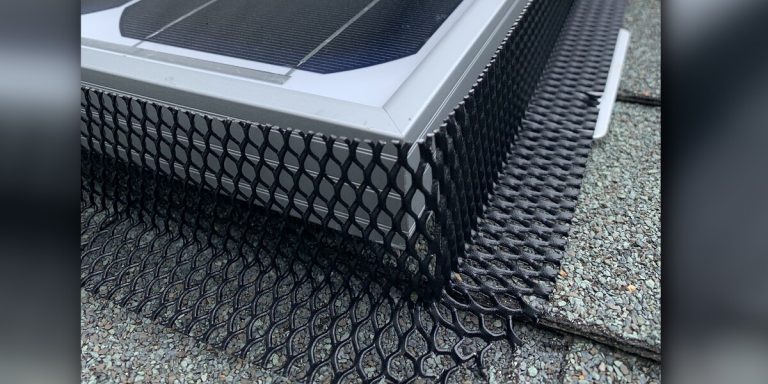
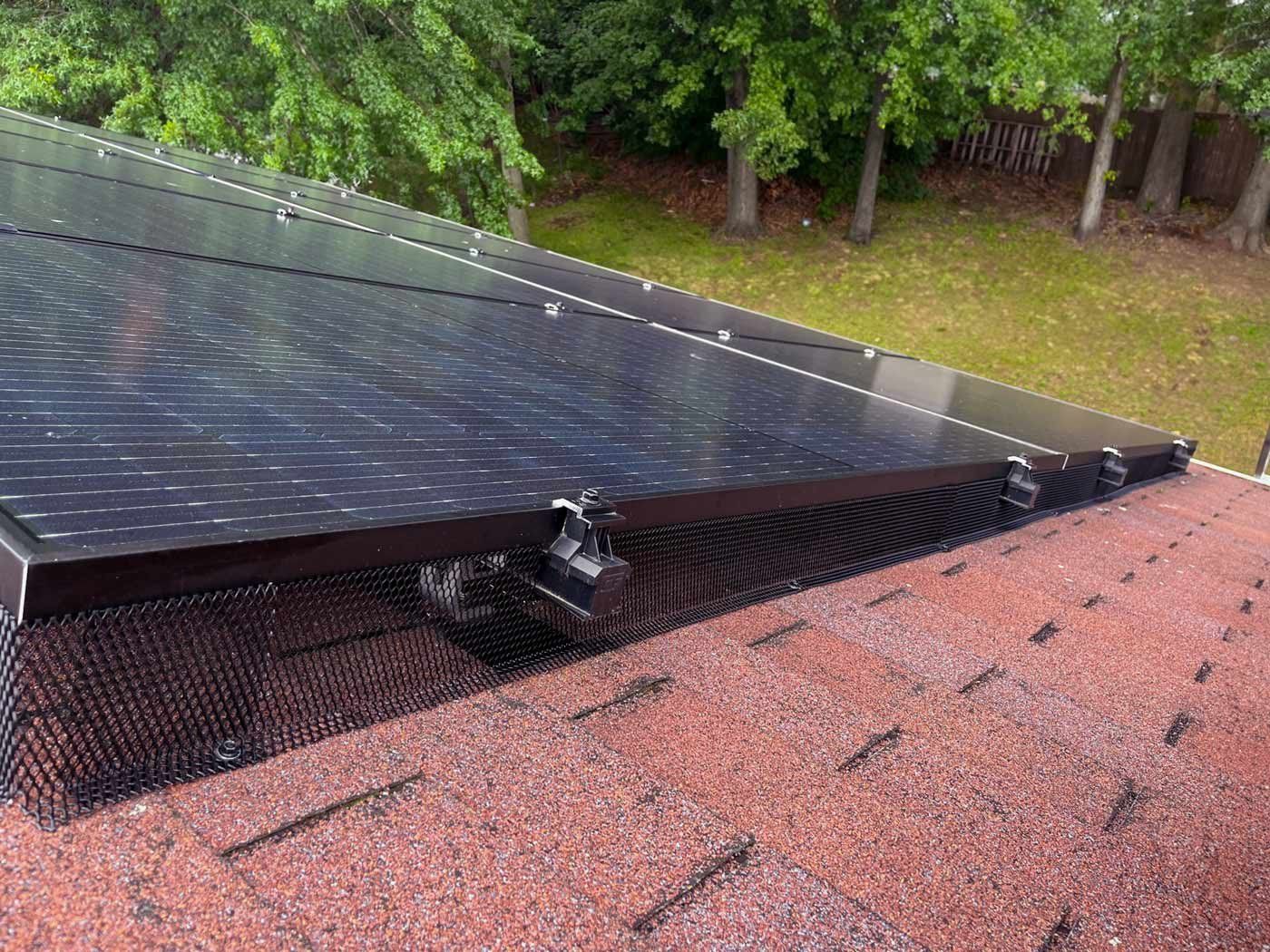
Because of the unavoidable gap beneath panels, solar panel critter guards are some of the most effective exclusion solutions.
Products like HY-GUARD EXCLUSION® Pest Armor® Profiles are designed to prevent wildlife intrusion without interfering with panel performance. These systems typically use 1/4” woven steel mesh to block small animals and debris from getting beneath panels.
Discover HY-GUARD EXCLUSION Pest Armor Profiles
One example is L-Mesh™, which attaches along the panel perimeter. The RAML550 features a 5-1/2" flange with a 5 degree bend, designed to effectively keep critters out.
Seasonal solar panel dangers
Residential solar panels face risks year-round, including severe weather, wildlife intrusion, electrical damage, and heavy snow loads. Understanding these risks helps homeowners prevent costly repairs.
Spring, summer and fall risks
- Hailstorms: Large hailstones — especially common in the central U.S. — can crack or shatter solar panel glass, leading to expensive replacements
- Hurricanes and high winds: Intense winds can dislodge poorly secured panels, wind-blown debris may also strike panels, causing surface damage or electrical issues
- Lightning strikes: Lightning can cause significant damage to both the array and the home’s electrical system, particularly in storm-prone regions
- Extreme heat: Temperatures above 77°F (25°C) reduce solar panel efficiency
- Soiling and debris: Dust, leaves, and pollution buildup can decrease efficiencyand create “hot spots,” which contribute to fire risks
Damage might also occur during installation, after severe storms, or when aging seals allow moisture intrusion over time.
Wintertime woes
Winter brings its own set of challenges.
Snow and ice accumulation
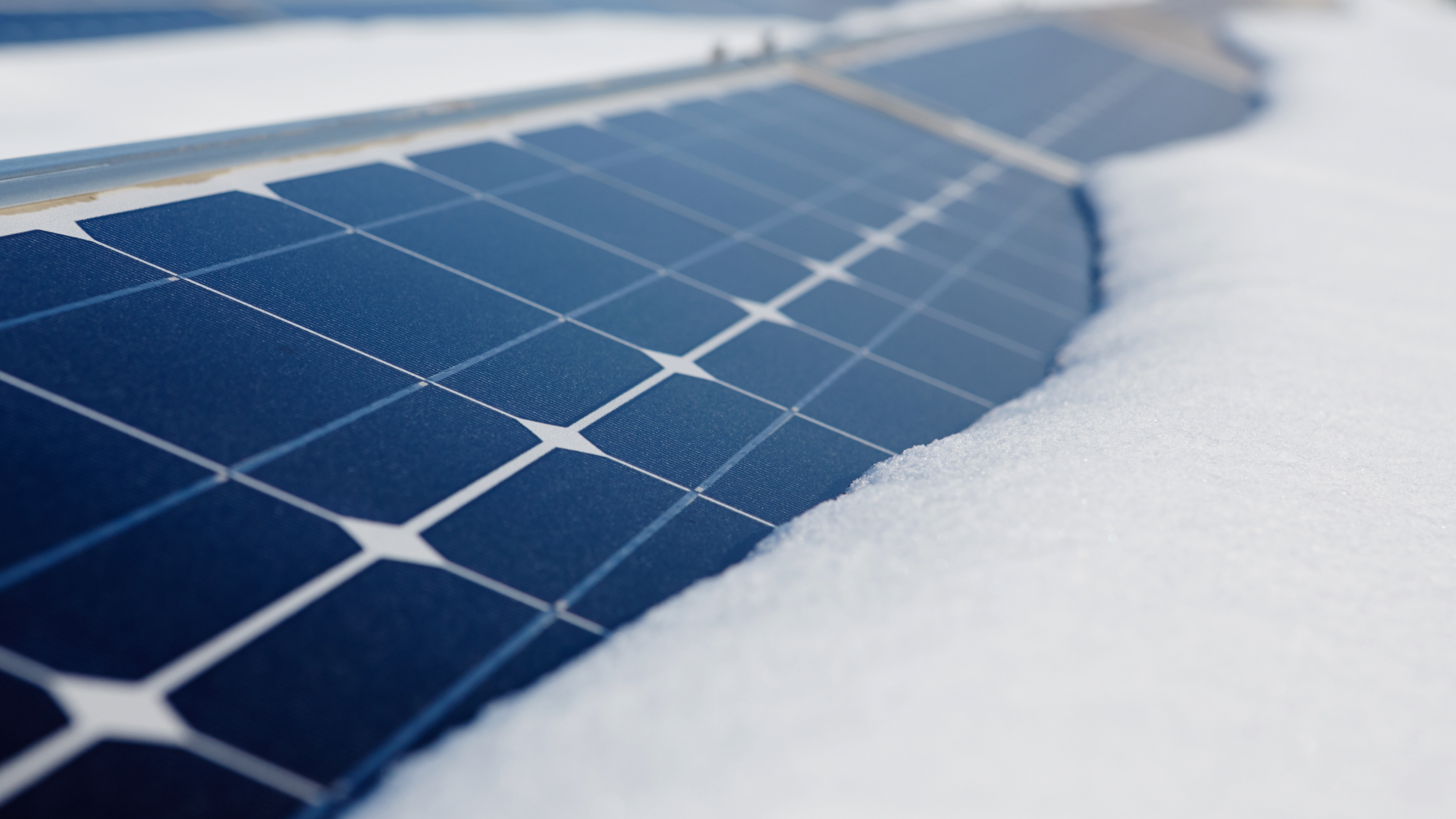
Snow blocks sunlight, temporarily halting power production until it melts or is removed. Heavy snow and ice can strain mounting systems and cause micro-cracks that worsen over repeated freeze-thaw cycles.
To reduce risk:
- Ensure proper panel tilt during installation
- Use non-abrasive roof rakes if removal is necessary
- Consider protective or de-icing features in colder climates
Year-round solar panel maintenance checklist
Routine inspection and seasonal preparation are essential for long-term performance.
Pre-Winter
- Inspect and secure any animal guards
- Remove nests and debris
Winter
- Allow snow to melt naturally
- Use a soft roof rake only if necessary
Spring
- Inspect wiring for chew damage
- Check panels for cracks or seal wear
Be sure to schedule routine professional inspections of the rest of your home, too, especially before and after winter.
Protecting your solar investment
Solar panels are a reliable source of renewable energy, but they require protection from weather, wildlife, and debris. With proper installation, routine inspections, and wildlife exclusion systems, homeowners can reduce repair costs, maintain peak efficiency, and protect their long-term ROIs.
As residential solar installations expand, proactive solar panel protection becomes more important now than ever.
