
Jun 16, 2026
Share:
Subscribe now and get our latest blog and video content delivered straight to your inbox.
Jun 16, 2026
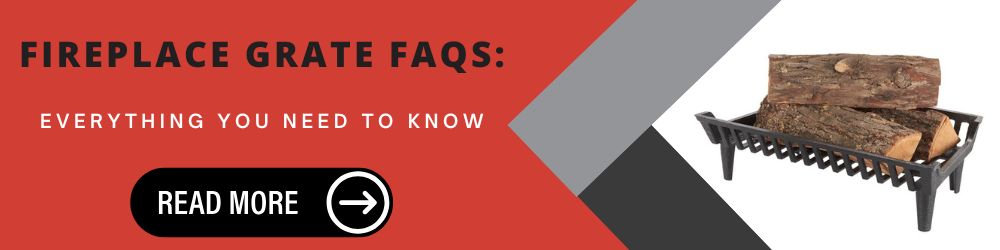
TL;DR: A properly sized fireplace grate improves airflow, increases burn efficiency, and protects your firebox walls. To find the right fit, measure your firebox's front width, back width, and depth, then subtract 6 inches from each measurement to allow for clearance. If you use a log lighter, measure its height too.
If you've ever built a fire that burned too fast, smoldered without catching, or left scorch marks on your firebox walls, there's a good chance your grate was the wrong size.
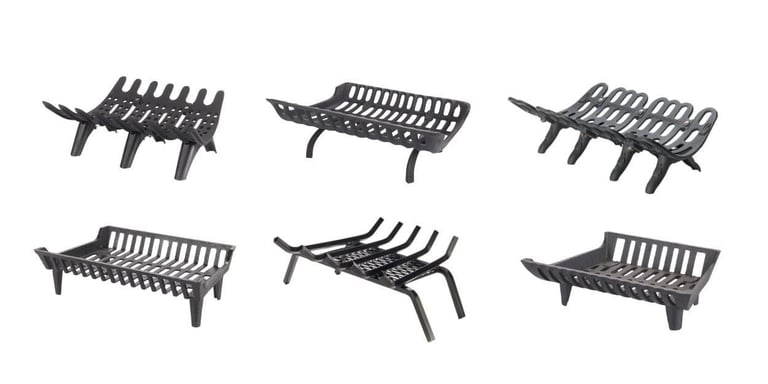
A fireplace grate is a critical component that controls how air flows beneath the fire, how efficiently wood burns, and how your fireplace is protected over time. We have a wide variety of fireplace grates in our Liberty Foundry Co.™ brand, and we’re well aware that, contrary to popular belief, they do more than just hold logs.
This makes getting the measurements right before you buy a fireplace grate is the single most important step. Here's exactly how to do it.
Why Proper Grate Sizing Matters
A grate that's too small creates too much open space around it, allowing excessive airflow. More airflow means faster combustion, which means your wood burns up quickly, you're constantly adding logs, and you're not getting the warmth and efficiency you paid for.
A grate that's too large is the opposite problem, and potentially a more damaging one. When a grate extends too close to the firebox walls, the intense heat of the fire can crack or deteriorate the masonry. Over time, that kind of damage gets expensive to repair.
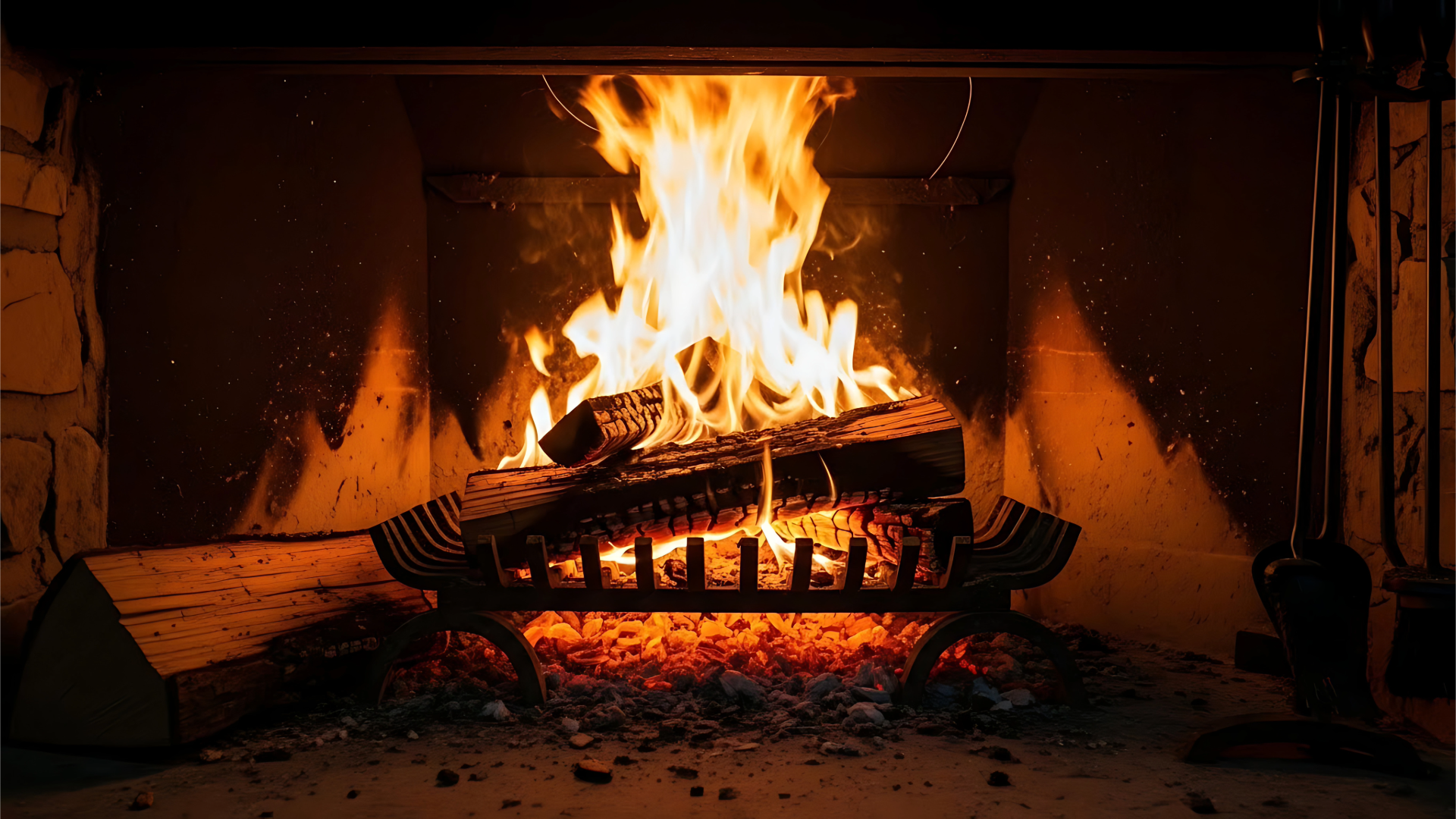
The sweet spot — a properly sized fireplace grate with adequate clearance on all sides — keeps airflow controlled, combustion efficient, and your fireplace in good shape for years to come.
Getting Started
You’ll need a few items to get started measuring your firebox for a fireplace grate.
- A metal tape measure (flexible measuring tapes can give inaccurate readings in corners)
- A notepad or your phone to record measurements
- A flashlight if your firebox is dark
After that, you can begin taking your measurements.
Step 1: Measure the Width (Both Front and Back)
This is the most important measurement, and it requires two readings, not one.
- Front width: Measure the full width of the firebox opening at the front, which is the widest point you can see when standing in front of the fireplace
- Back width: Reach as far back into the firebox as possible and measure the width at the rear wall. Take your time here to ensure accuracy
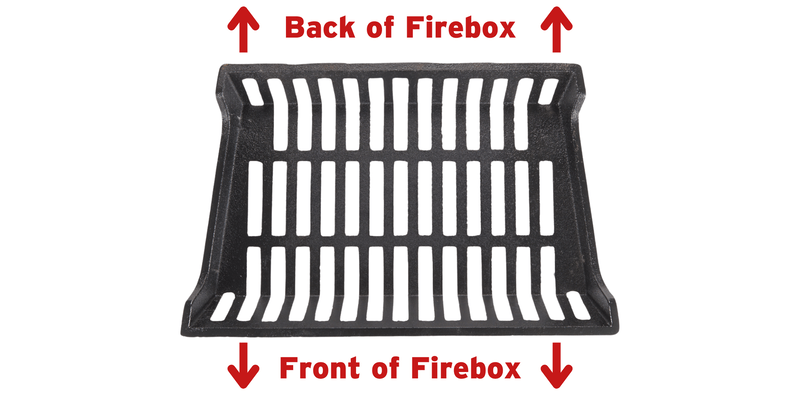
Why measure both? Many fireboxes are tapered, meaning they're wider at the front and narrower toward the back. If yours has a taper, always use the smaller of the two measurements (typically the back width) as your reference. This makes sure you don’t select a grate that fits at the front but can't actually sit flat inside.
Step 2: Measure the Depth
Next, measure from the back wall of the firebox straight to the front edge. This tells you how much room you have front-to-back, ensuring your logs and grate won't extend past the firebox opening — a fire hazard you want to avoid entirely.
Step 3: Measure the Log Lighter Height (If Applicable)
If your fireplace is equipped with a gas log lighter, the small metal pipe or tube that runs along the firebox floor, you'll need to measure how tall it stands off the floor.
Your grate needs to clear this component so it can sit level and stable. Even an inch of extra height can affect how your grate fits and functions.
Step 4: Calculate Your Ideal Grate Size
Now that you have your measurements, apply this rule: Allow at least 3 inches of clearance between the grate and each side of the firebox. That's 3 inches on the left, 3 on the right, 3 at the front, and 3 at the back.
In practical terms:
- Width: Subtract 6 inches from your smaller width measurement (front or back)
- Depth: Subtract 6 inches from your depth measurement
For example, if your back width is 28 inches and your depth is 18 inches, you'd look for a grate that's no wider than 22 inches and no deeper than 12 inches.

This clearance is an important precaution, keeping heat from concentrating directly against your firebox walls and maintaining the airflow pattern that makes your fire burn both cleanly and steadily.
Important: Know Your Fireplace Type
A steel bar grate can last a year. Ours tend to last two to five. Meanwhile, a solid cast iron can last a decade or more, depending on the fireplace and frequency of use.
The steps above are designed for masonry fireplaces, or the classic brick or stone-lined firebox built directly into the structure of a home.
If you have a zero-clearance fireplace (a factory-built metal firebox often used in newer homes) or a fireplace insert (a unit installed into an existing opening), the process looks different. These fireplaces have specific dimensional requirements set by the manufacturer. For the best fit, either measure the grate you're currently using and match those dimensions, or consult the manufacturer’s owner's manual for the recommended grate size range.
Using the wrong grate in a zero-clearance or insert fireplace can void your warranty or create a safety issue, so it's worth taking the extra step to verify.
Quick Reference: Measurement Checklist
Before shopping for a grate, make sure you have all of these written down:
- Front width of firebox opening
- Back width of firebox (as far back as possible)
- Depth of firebox (back wall to front edge)
- Log lighter height (if applicable)
- Calculated grate width (smaller width measurement minus 6 inches)
- Calculated grate depth (depth measurement minus 6 inches)
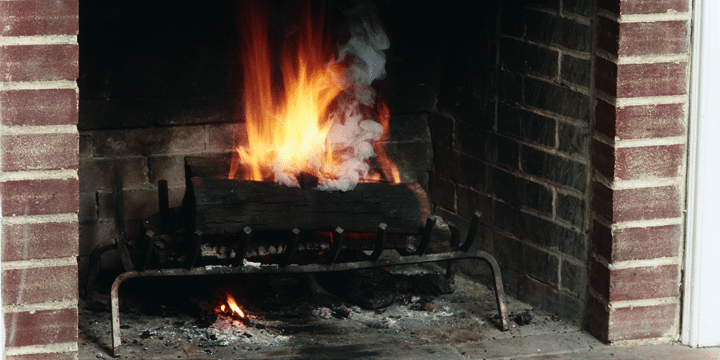
How to Measure for a Fireplace Grate
Measuring for a fireplace grate might take less than ten minutes, but it's often the difference between a successful fire and one that's frustrating, inefficient, or potentially harmful to your fireplace.
Take both width measurements, account for taper, subtract your clearance, and you'll be set to find a grate that fits perfectly and does its job. A well-fitted grate is one of the easiest ways to get more heat, better burns, and longer life out of your fireplace.